Brothers in Arms Memorial — Where Courage Unites Nations

London, Ontario

A legacy shared across oceans

Indian and Canadian soldiers served through one of history’s defining conflicts. Their courage and sacrifice deserve to be remembered.

LOADING THE JOURNEY

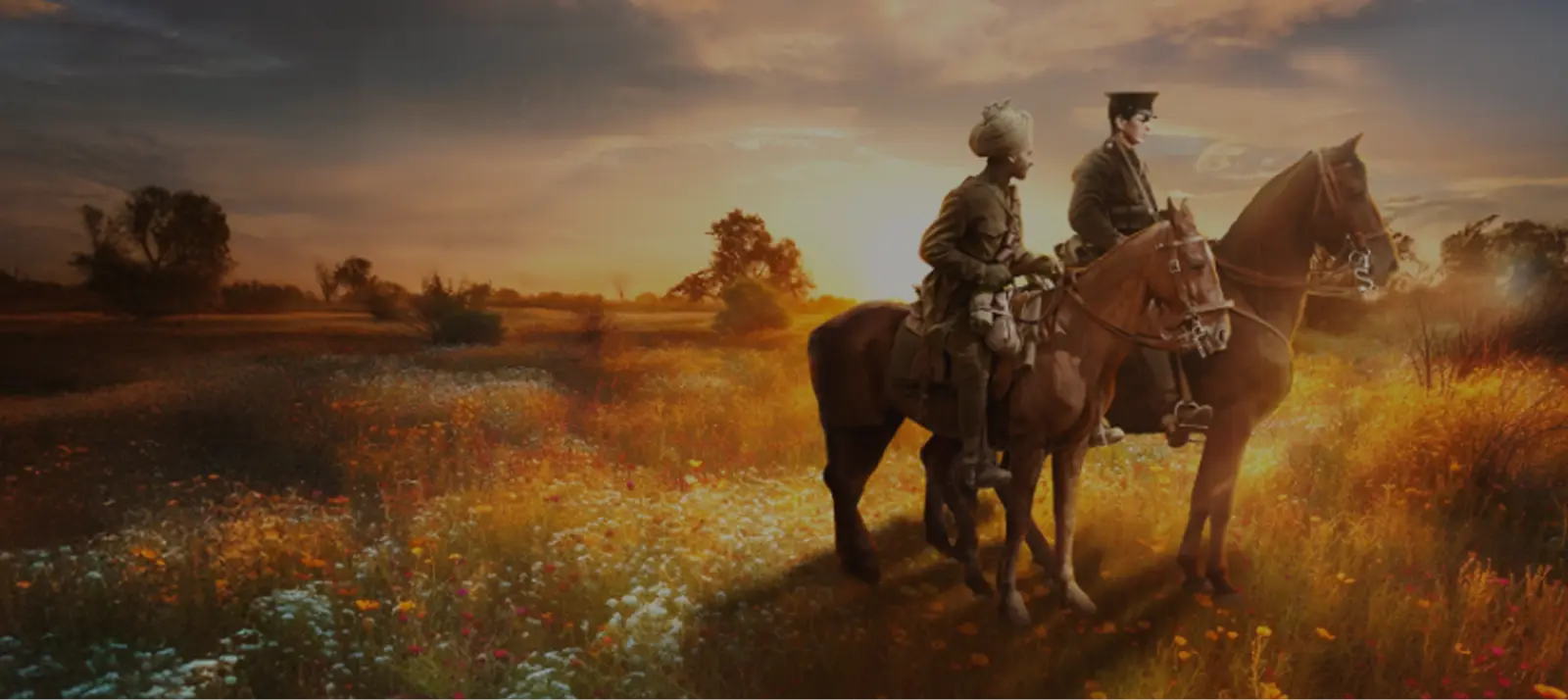
Artistic historical reconstruction

About the Memorial

Where courage unites nations

The Brothers in Arms Memorial is being created as a place of remembrance, education and unity — honouring Indian and Canadian soldiers whose shared First World War history deserves lasting recognition.

  • Granite memorial
  • Heritage trees
  • Scenic pathways
  • Historical interpretation
  • Educational value
  • Community participation
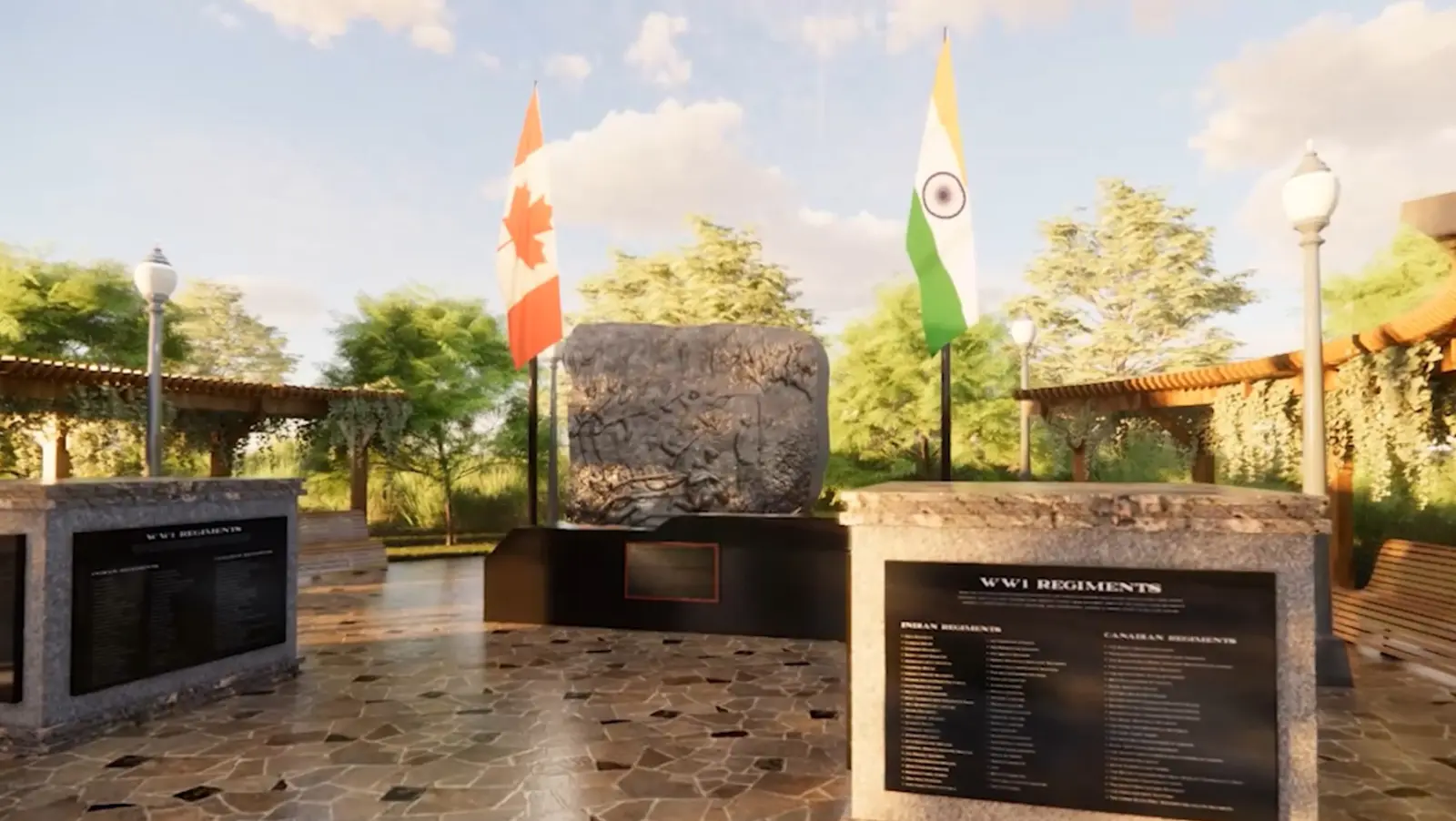
Architectural rendering of the Brothers in Arms Memorial: an engraved granite monument on a stone plaza, flanked by regiment plaques, flagpoles and heritage trees.
The Brothers in Arms Memorial, London, Ontario · Architectural rendering

Project figures — heritage trees planted, supporters, volunteers and funds raised — are published here once they are confirmed by the memorial project and its payment provider.

FIGURES PENDING VERIFICATION

The Grounds

A walk through remembrance

The memorial is designed to be walked, not only viewed — a granite monument, pathways between heritage trees, and quiet places to stop and reflect.

The monument

An engraved granite stone at the centre of the plaza, carrying the memorial's dedication.

Heritage trees

Planted along the grounds as a living element of the memorial, growing alongside the stone.

Walking paths

Routes through the site connecting the monument, the plantings and the places to sit.

Reflection areas

Seating and sheltered structures set back from the plaza for quiet time.

History

A shared legacy

Indian and Canadian forces followed different paths through the First World War, and those paths crossed. This timeline follows the years where their service overlapped.

  1. 1914

    The Indian Corps reaches France

    Indian Expeditionary Force A lands at Marseille in late September 1914 and is in the line in Flanders within weeks. Sepoy Khudadad Khan's actions at Hollebeke on 31 October bring the first Victoria Cross awarded to a soldier born in the Indian subcontinent.

    Source: National Army Museum, London

  2. 1915

    Neuve Chapelle, Second Ypres and Loos

    The Indian Corps plays a central role at Neuve Chapelle in March. In April the 1st Canadian Division meets the first large-scale gas attack at Ypres, where Indian units also serve in the counter-attacks. By the end of the year the Indian infantry divisions leave the Western Front.

    Source: Canadian War Museum; Imperial War Museums

  3. 1916

    The Somme and Kut

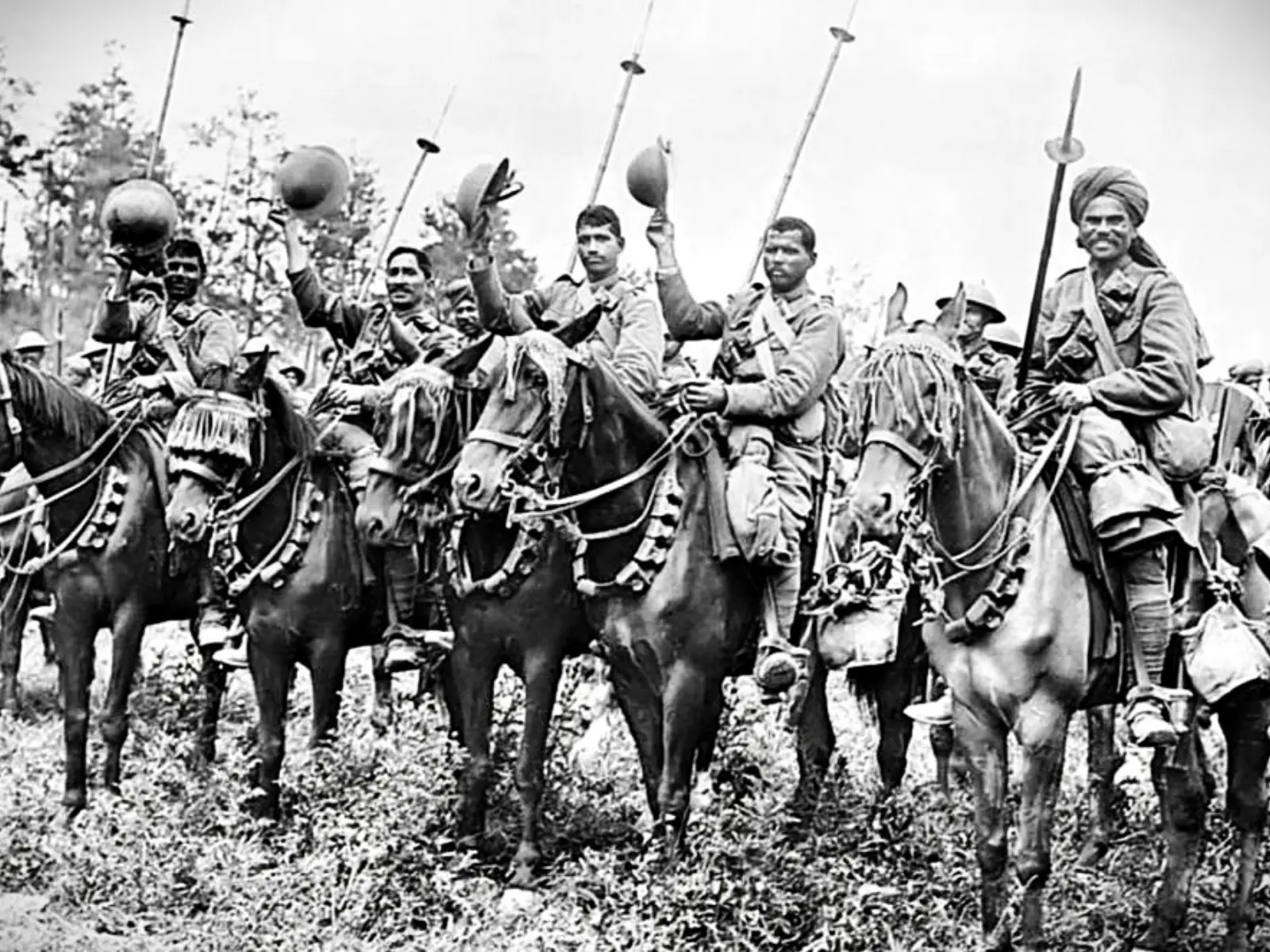
    The Canadian Corps fights at Courcelette in September. Indian cavalry advance towards High Wood in July. In Mesopotamia the besieged garrison at Kut-al-Amara surrenders in April.

    Source: Canadian War Museum; Imperial War Museums

  4. 1917

    Vimy Ridge

    All four divisions of the Canadian Corps attack together for the first time and take Vimy Ridge in April.

    Source: Veterans Affairs Canada

  5. 1918

    Haifa and the Armistice

    Indian cavalry of the 15th Imperial Service Cavalry Brigade take Haifa in September. The Armistice comes into effect on 11 November.

    Source: Imperial War Museums

Stories

Key historical stories

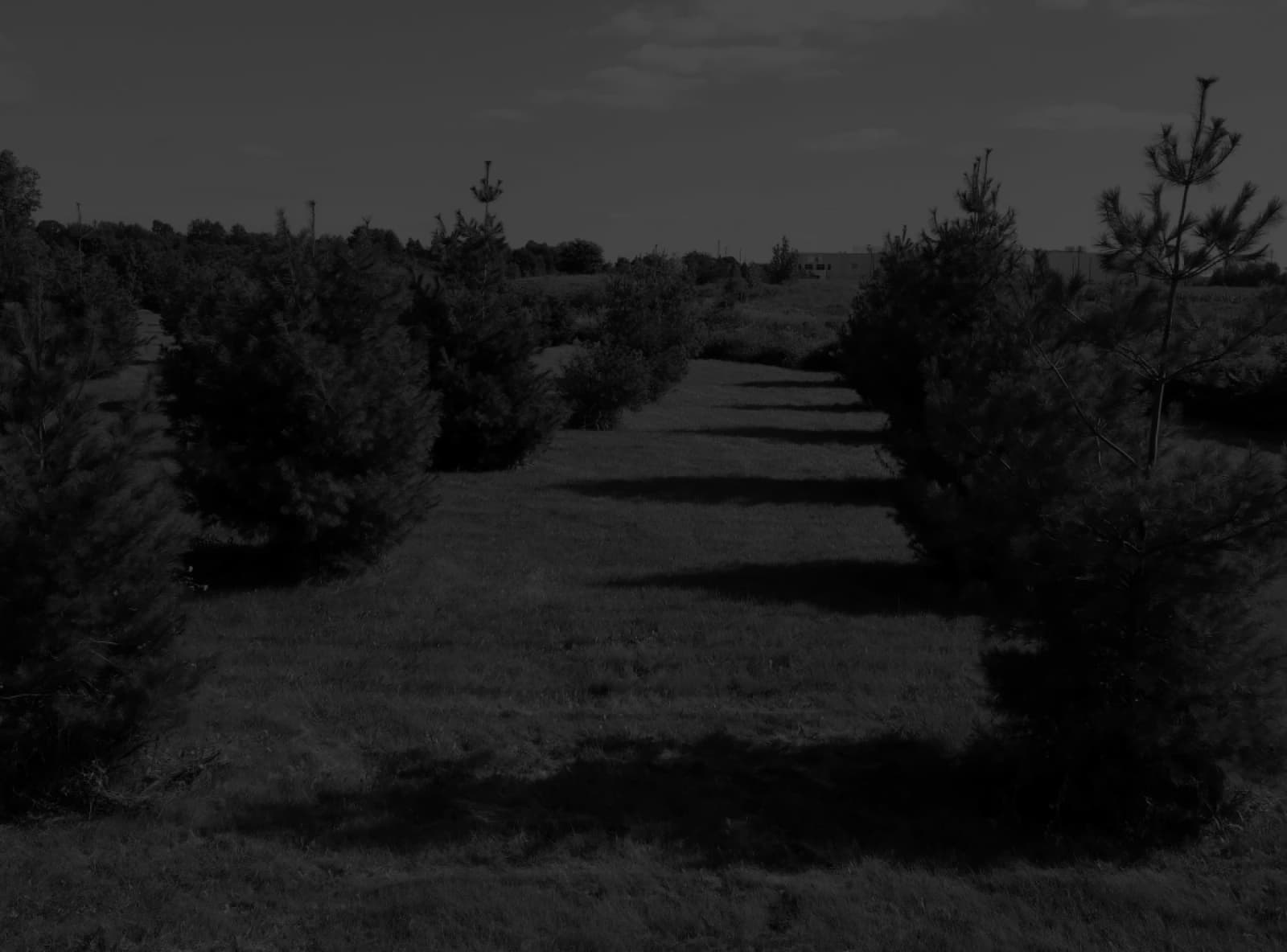
Rows of young evergreen trees along a mown path at the memorial site on Veterans Memorial Parkway.
Heritage tree plantings at the memorial site.

The Living Memorial

Stories, trees, one shared legacy

Alongside the stone, the memorial grows. Heritage trees planted across the grounds make remembrance something living — tended, changing with the seasons, and outlasting all of us.

News & Events

Latest news and events

No published news or events yet

News articles, ceremonies and community events will appear here once they are entered. Each entry carries its own date, location, accessibility information and registration status, and past events are labelled automatically so nothing outdated is ever shown as upcoming.

Education

Preserving history for future generations

The memorial is built to teach. Resources are being prepared for students, teachers, researchers, families, community groups and veterans’ organisations.

Teacher guides
Historical timelines
Source lists
Suggested reading
Archival links
Memorial activity sheets
School-visit information
Community group resources

Resources are published only where copyright permission allows.

Supporters

Built through community

Partner and sponsor logos pending permission

No logo is displayed here without written permission from the organisation it belongs to. Founding partners, government supporters, community organisations, sponsors, educational partners and veterans’ organisations will be listed once those permissions are confirmed.

Support

Help preserve their shared legacy

Your support helps create and maintain a lasting place of remembrance, education and community reflection.

Visit

Plan your visit

The memorial stands on Veterans Memorial Parkway in London, Ontario. Full visitor information — access, parking, hours and group bookings — is published as each detail is confirmed.

Two First World War cavalrymen, one wearing a turban and one a peaked cap, mounted side by side in a field at sunset.
Artistic historical reconstruction